


50 cm
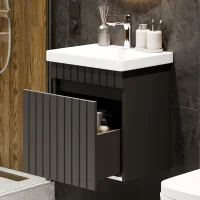
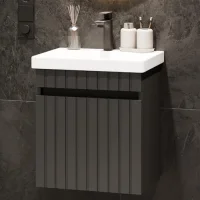
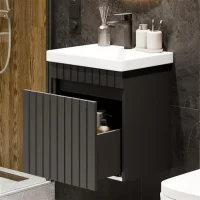
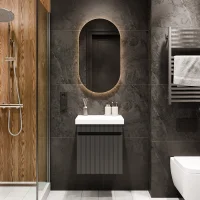
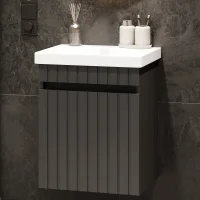
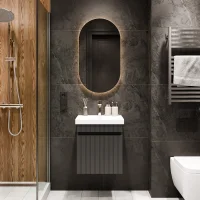
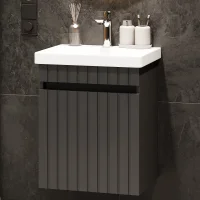
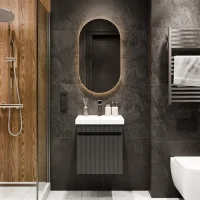
50-cm vanity cabinet





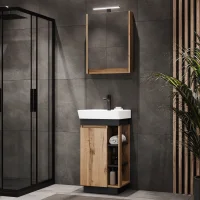
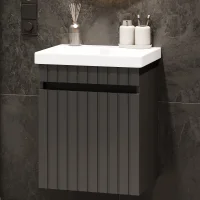
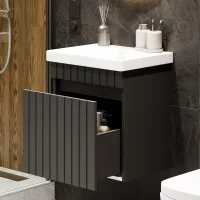
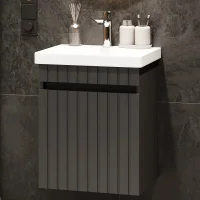
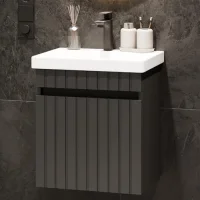
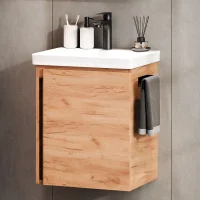
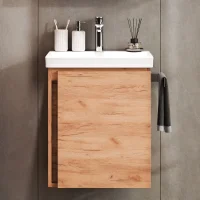
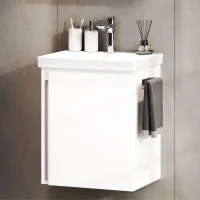
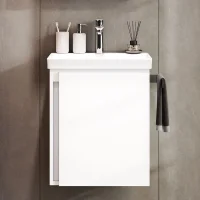
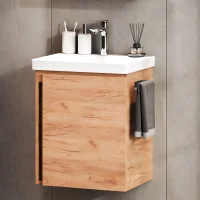
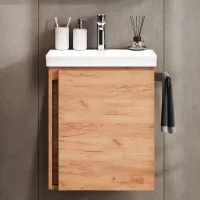
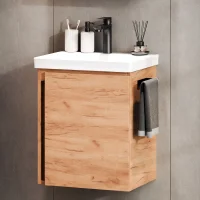
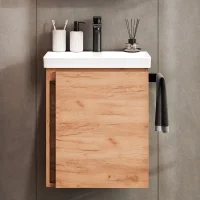
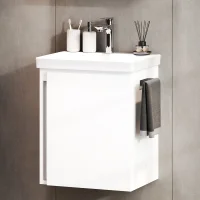
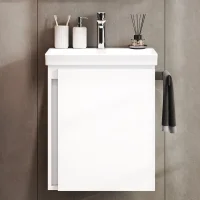
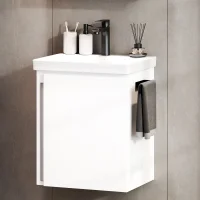


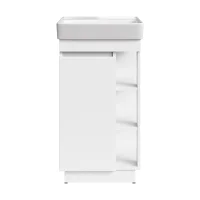
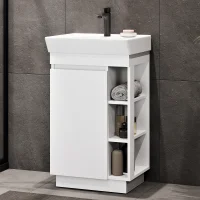
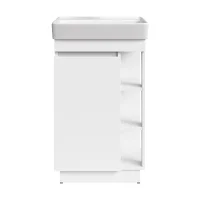
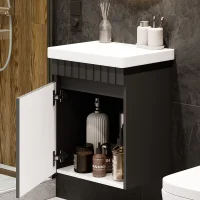
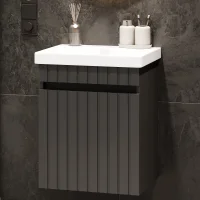
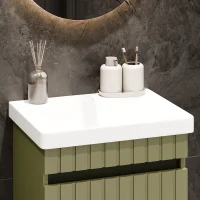
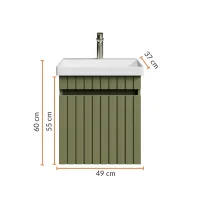
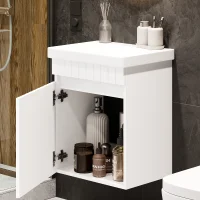
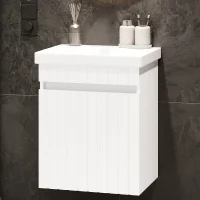
Your ideal vanity unit
Whether your bathroom is new or old, a vanity unit offers many advantages. It’s definitely worth taking a closer look at this special piece of bathroom furniture, as it enhances your bathroom and offers a number of benefits.
The benefits of a vanity unit
The obvious advantage is that you can conceal all the pipework beneath the washbasin. Connection pipes and the siphon are no longer visible, but are neatly hidden away in the vanity unit. At first glance, this might not seem like a decisive factor in favour of a vanity unit. However, the longer you use your bathroom, the quicker you’ll start to be bothered by an unattractive appearance – especially if you’ve put a lot of effort into designing it. A vanity unit solves this problem in an instant. Another advantage is the extra storage space you gain. On the one hand, you can store various items in your new unit. On the other hand, you can even fit further accessories (or rest your feet) beneath wall-mounted cabinets. Toilet paper, soap, tubes of toothpaste, towels, cleaning products and the like: everything fits perfectly in or under the vanity unit. Such a unit therefore allows you to make the most of the often limited space in your bathroom.
What to look out for when choosing your vanity unit
When choosing your vanity unit, pay particular attention to the following aspects:
1. How deep is your washbasin? A 50 cm washbasin requires a 50 cm vanity unit. Otherwise, you’ll be wasting space unnecessarily, amongst other things.
2. Should the vanity unit be wall-mounted or free-standing? Both systems have their own distinct advantages and disadvantages. A free-standing unit simply goes in place and that’s it. A wall-mounted unit does need to be fitted first, but in return you can adjust it perfectly to the height of your washbasin. What’s more, you can rest your feet under a wall-mounted unit whilst brushing your teeth. You can’t do that with a floor-standing unit.
3. Do you need drawers or doors? Doors offer more storage space inside the unit. You lose that with drawers, but on the other hand, you can access the contents of the vanity unit much more easily, as you reach in from above and don’t have to kneel down.
4. What colour should the vanity unit be? Depending on the look of the rest of the bathroom, one colour or another will fit in better with the overall design. For example, a cabinet like this can create visual contrasts.
5. Do you want a matt or a glossy vanity unit? The main factor to consider here is cleaning.
The size of the unit
The size of the washbasin is the deciding factor. The most important point, therefore, is that the vanity unit fits perfectly underneath it. If the washbasin is 50 cm wide, anything underneath it should also be that size. Ultimately, this is primarily about making the best use of space. But that’s not the only important consideration. The plumbing connections for a 50 cm washbasin protrude further into the room than those for a smaller washbasin. This means that a cabinet beneath the washbasin area needs to be of a minimum size to conceal the pipes and siphon. The rule of thumb is therefore: 50 cm washbasin = 50 cm cabinet.
The design of your 50 cm vanity unit
Regardless of whether the vanity unit is 50 cm or a different size, the look of the bathroom also determines the design of the vanity unit. A 50 cm vanity unit in anthracite does not usually suit a dark room. In this case, it makes sense to create a contrast. However, many washbasins are white. It may therefore be worth considering a vanity unit in a different colour. It is also important to decide whether the vanity unit should have a matt or glossy finish. Here, you should bear cleaning in mind. Fingerprints, soap residue or water marks are much more visible on a glossy surface. On the other hand, such a unit looks more stylish than a matt one. Ultimately, though, it’s always in the eye of the beholder.